
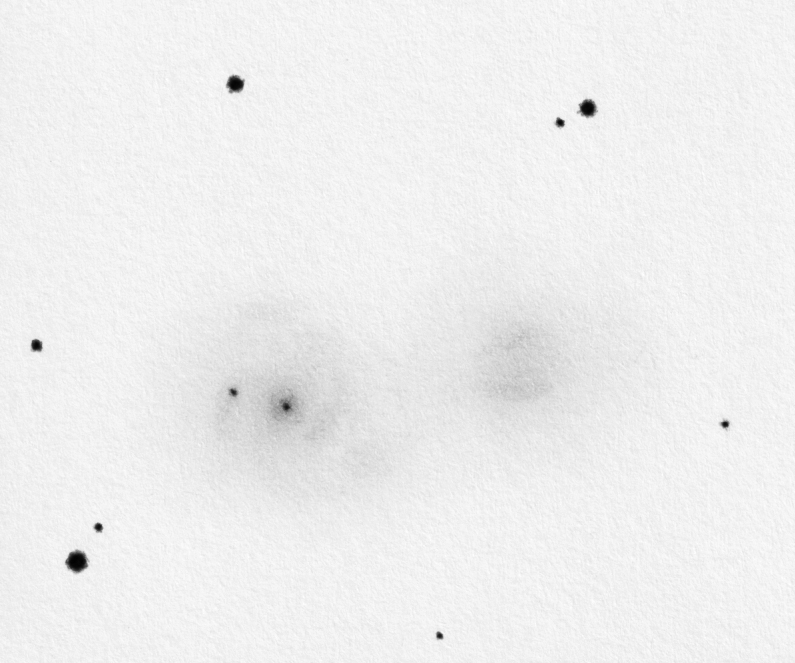
I remember when I first saw the Hubble image of the interacting galaxy pair NGC 2207 and IC 2163, the catalog numbers of the galaxies struck me as odd. The winter sky is not exactly known for an abundance of galaxies. I checked their location and immediately wrote them off, concluding that I would never get a proper look at them. Canis Major (the Great Dog constellation) lies quite far south. While the galaxies are technically visible from Hungary and they aren't even really faint, hovering around 11m-12m, they sit so low above the horizon that discerning any detail seems impossible. That "never" actually came on May 10, 2016, in Hakos, Namibia. From the southern hemisphere the galaxies appear much higher in the sky, and a 16" telescope is sufficient to reveal some beautiful details.
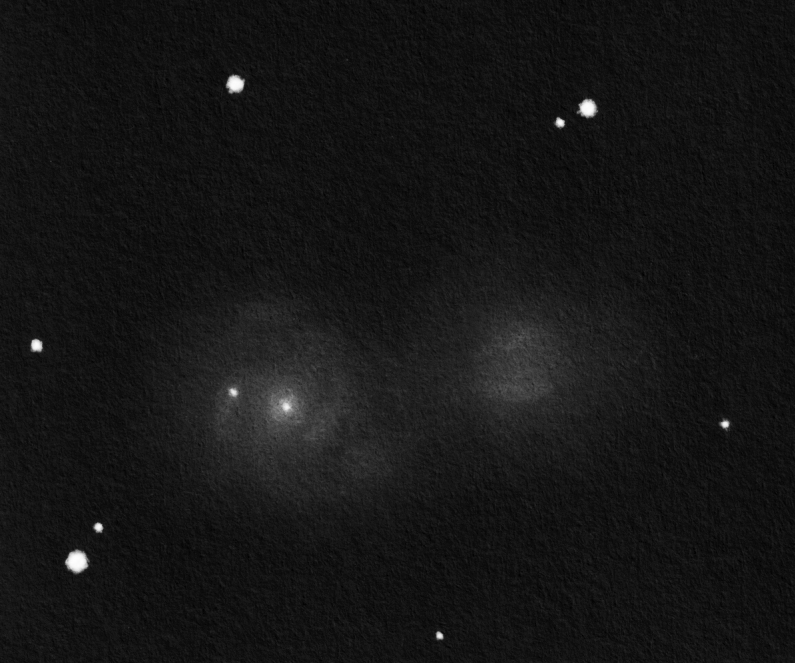
NGC 2207 (on the left in the drawing) has a bright, stellar nucleus and faint outer regions. The spiral structure is visible though very difficult. In contrast, IC 2163 appears to lack a distinct nucleus. Its surface is very diffuse yet inhomogeneous. Hints of the spiral structure are visible here as well. Although based on the catalog data these galaxies are bright, observing them is far from simple. Discerning details is extremely challenging, and the galaxies remain rather elusive.
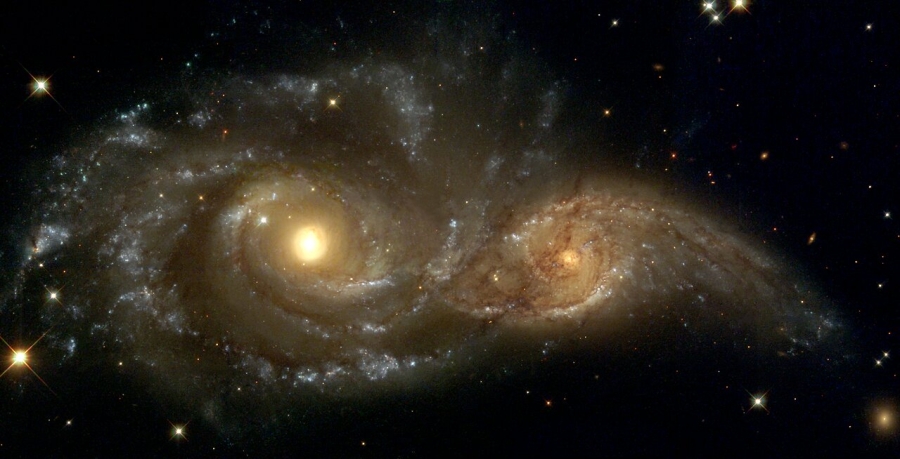
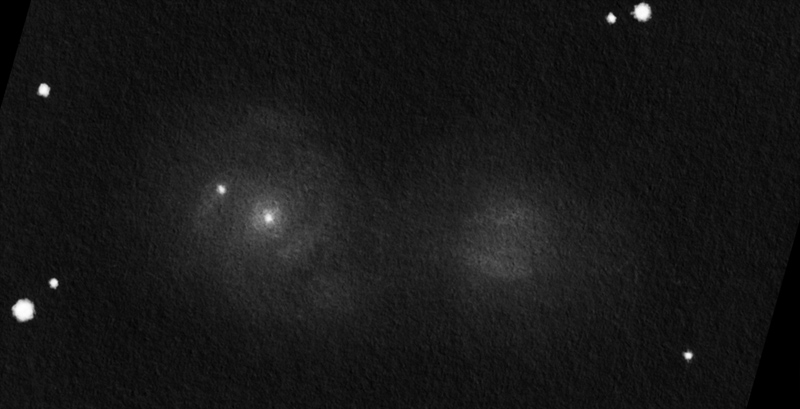
You can see the Hubble Space Telescope (HST) photo on the left along with my 16" drawing rotated and inverted into positive. I think it is obvious why I decided to take a look at and draw these galaxies.
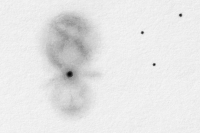
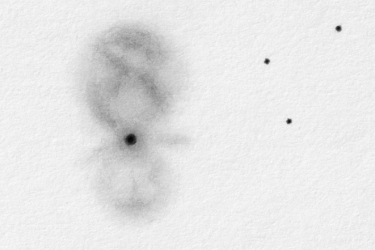
Hydra planetary nebula
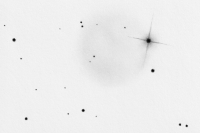
Huge, faint and round planetary nebula
Canis Major galaxies
Interacting pair of galaxies in the winter sky
Carina diffuse neblua
Ejection cloud of the Great Eruption of Eta Carinae in 1838-43
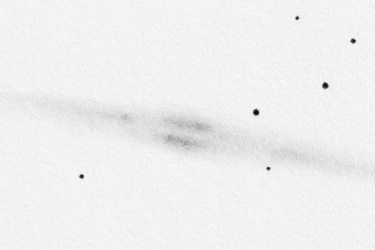
Antlia galaxy
Edge-on spiral galaxy in Antlia
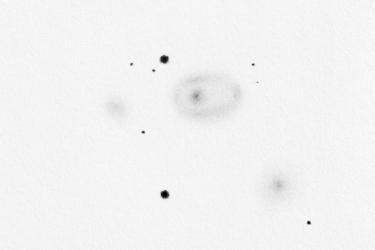
Volans galaxy
Interacting ring galaxy in Volans
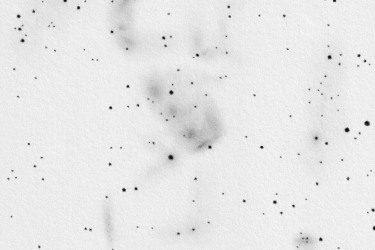
Carina diffuse nebulae
Highly structured emission nebula complex in Carina