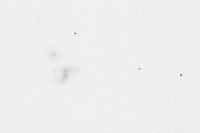



I processed my sketch and made the final drawing exactly 10 years after I drew it by the telescope and the exotic atmosphere comes back. The scents in the dry air, the gentle breeze, the countless stars of the Vela constellation. How we felt at home from the first moment.
NGC 2899 is one of the many exotic objects that are inaccessible from my home and add to the allure of the southern sky.
The planetary nebula is not terribly bright, but it is also not faint at all. Its structure is very similar to M 76. The right one of the two bright lobes is brighter. I could see a small brighter spot and in it roughly in the middle of the nebula. I do not rule out that this is the central star. But it is more likely that I mistakenly saw a brighter part of the nebula and the central star together as a small spot. The brighter parts are inhomogeneous and their outlines are very interesting. The faint peripheries nicely complement the nebula. With an [OIII] filter the nebula is much brighter compared to the background.


You can see the Hubble Space Telescope (HST) photo on the left made with the WFC3 camera along with my 16" drawing that I inverted rotated and cropped to roughly match the Hubble field.
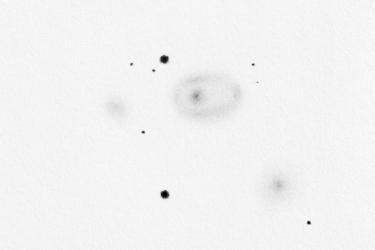
Volans galaxy
Interacting ring galaxy in Volans
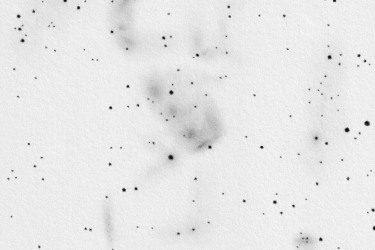
Carina diffuse nebulae
Highly structured emission nebula complex in Carina
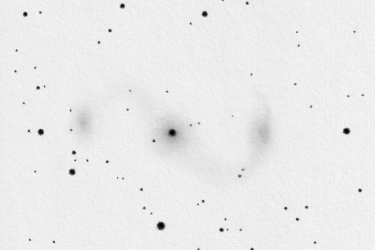
Norma diffuse nebula
Really unique diffuse nebula in Normában
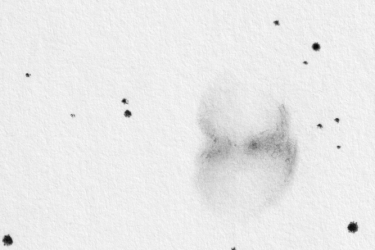
Vela planetary nebula
Planetary nebula in the thick Mily-Way fields of Vela
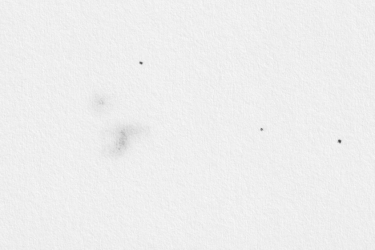
Phoenix galaxies
Entangled interacting galaxies in Phoenix
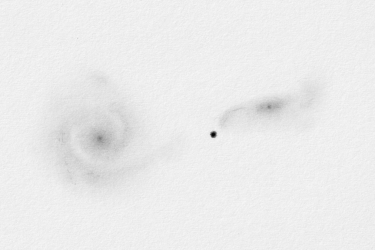
Virgo galaxies
Arp 271 interacting galaxies in Virgo