
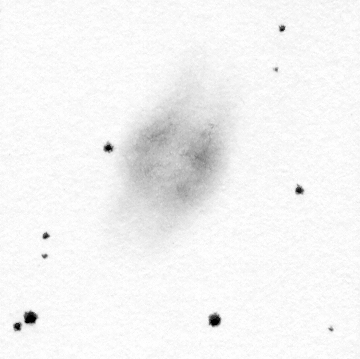
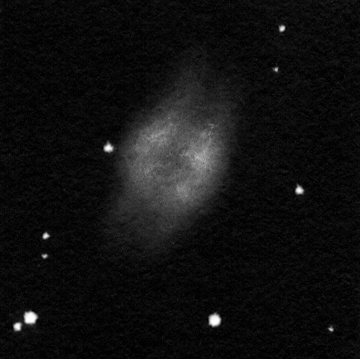
NGC 2818 was one of the two objects (the other one being IC 4406) that I very much regreted not taking a look at in 2012. For four years I didn't have a clue how they could look like. The Hubble images of both planetary nebulae are wonderful but they don't help in finding out how they actually look in a telescope. Furthermore NGC 2818 is located in an open cluster. The nature of this connection is still debated whether it's physical or only a line-of-sight alignment. The open cluster only made me more curious. You can only read "in a cluster" everywhere. Photos don't give justice to open clusters in general.
The open cluster is surprisingly beautiful live in the eyepiece. And I had to frame the nebula very tightly to keep it look good and to avoid drawing half of the cluster. So in the end I wrote only "in a cluster" as well to my sketchbook.
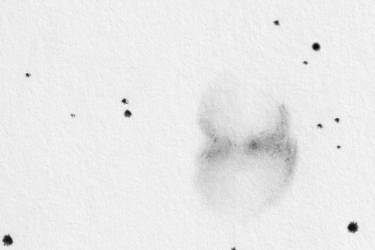
The planetary nebula is bright and very beautiful. Similar to NGC 3195 it seems to have some kind of bipolar symmetry and the bright parts form an open ring. The right part of this ring is slightly brighter. A couple of bright spots are visible in the "ring" the inner parts of which are inhomogenious. Where the ring opens four little tails are visible using an [OIII] filter. The continuation of these tails is visible without a filter as well. These give an elongated shape to the nebula.
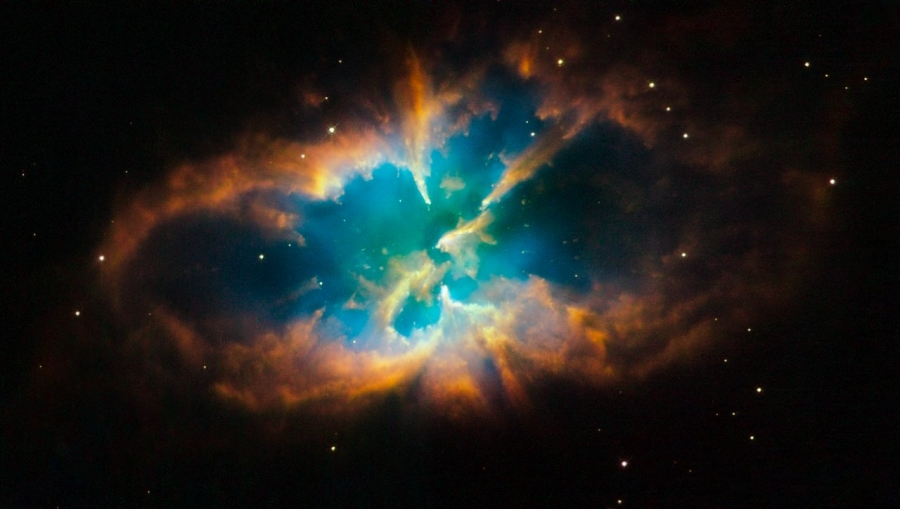
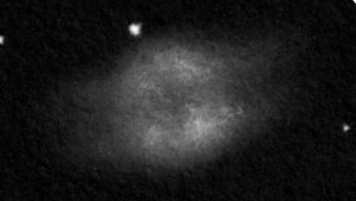
You can see the Hubble (HST) photo of NGC 2818 on the left. It was taken with the WFPC2 camera. I cropped and rotated my inverted drawing to sort of match the field of the Hubble photo. I got the needed rotation angle by comparing my drawind with wider-field photos based on the stars.
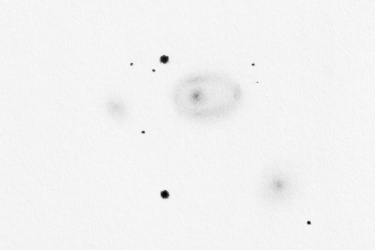
Volans galaxy
Interacting ring galaxy in Volans
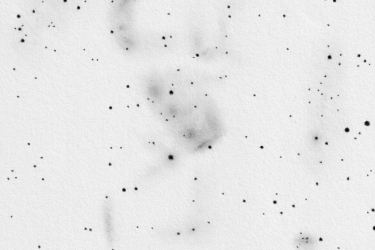
Carina diffuse nebulae
Highly structured emission nebula complex in Carina
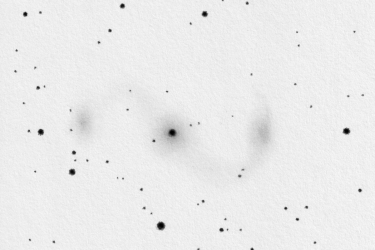
Norma diffuse nebula
Really unique diffuse nebula in Normában
Vela planetary nebula
Planetary nebula in the thick Mily-Way fields of Vela
Phoenix galaxies
Entangled interacting galaxies in Phoenix
Virgo galaxies
Arp 271 interacting galaxies in Virgo